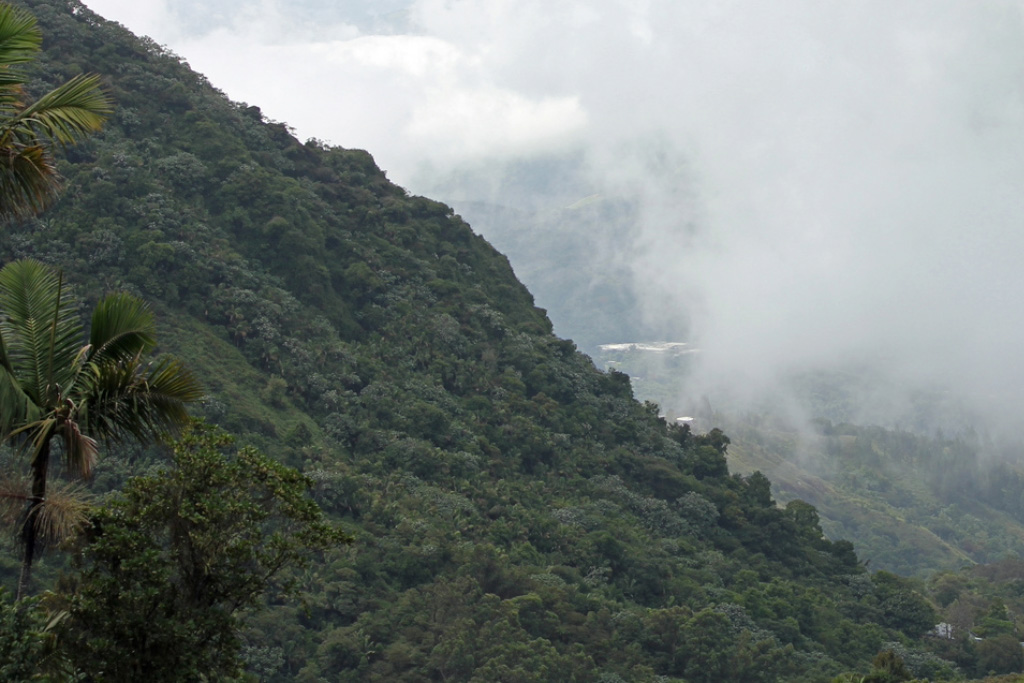
Luica Matuonto asked me to submit an article for her blog on writing related to my new book, Migrations. So, I decided to write on researching the Puerto Rican diaspora for the collection. I consider where that quest for information led me. You can read it here: https://www.luciamatuonto.com/post/growing-up-latino.
“Writing is an extreme privilege but it’s also a gift. It’s a gift to yourself and it’s a gift of giving a story to someone“–Amy Tan.
I finally got around to watching the documentary on Amy Tan, Unintended Memoir. It is a riveting look at the groundbreaking writer, and the connection between her life and her work. After watching the film, it is easy to understand how Tan came to see writing as a gift. Her multiple talents (she’s also a pianist and artist) and her trajectory as a best-selling author fascinated me. Her commitment to truth, craft and aesthetics impressed me. But my main takeaway from the James Redford documentary was Tan’s struggle to make sense of her parents’ past, especially her mother’s, as she navigated her life as a Chinese-American. Her journey is similar to that of other multi-ethnic American writers who struggle to come to grips with their lives and past within this country. A country that sometimes is not hospitable to us or the stories we tell.
In this context, writing for us is not only a privilege. It’s a privilege that we have reclaimed and proclaimed as a right. Writing is also truly a gift to ourselves, because it is a form of cathartic empowerment. It is a gift to sustain our sanity, well-being and, more importantly, our survival. And what a gift it is for others! If, as Mikhail Bakhtin elegantly wrote, “language is a bridge built between me an another,” then stories are the vehicles that traverse that bridge. As BIPOC writers, we take readers to places never before explored and by doing so transform their lives. Our stories help us all to understand the holistic history of this country we inhabit. They help unite us as human beings through understanding, compassion and empathy.
“If there’s a book that you want to read, but it hasn’t been written yet, then you must write it.” — Toni Morrison
It’s almost two years since we lost the inimitable Toni Morrison. How I miss her wisdom, insight, and eloquence. This quote from her is one of my favorites, because it’s so fundamentally true. Yet, as a writer, you never think absence of what you want to read should be a primary source of inspiration.
Of course, you should write what you crave to read. That ache in your hunger for a specific story is probably felt by others like you. I’ve taken this quote as a mantra for my projects. I wondered why no one had written about a nuyorican returning to the island. So, I did it. Now, I’m working on a novella that tackles the insidious type of racism we find in Puerto Rico and other Latinx communities. I’ve always wondered why Puerto Ricans and Latinx people generally do not want to confront the real issues of our type of racism, which is indeed quite different, although no less virulent, than the one in the United States. I always wanted to read a novel that would touch on those issues, but it didn’t exist. So, I went to work on it, and the main character is Roberto Clemente. Hopefully, by the end of 2022, I’ll have a manuscript ready to send out.
Lucia Matuonto was nice enough to invite me on her videocast, Uncut, after interviewing me on her other podcast, The Relatable Voice. Listen to our conversation, which is more informal and personal, here:
“Writing is a struggle against silence.” —Carlos Fuentes
What does Carlos Fuentes mean about writing against silence and how is it a struggle? Is it a struggle against the proverbial blank page, or in more modern terms the white, blinking screen–a manifestation of silence writers continually face? Or is he referring to the ability of writers, through their creative efforts, to break silences and reach the truths that are hidden by them. I’d like to think the world renowned Mexican writer was talking about something more profound than procrastination or mental blocks.
Given the current strategies by some in the United States to avert or deflect the horrific facts of our history, I would argue with Carlos Fuentes that, in this case, writing is a struggle to break the silence systemically imposed on the real truth of that national history. No nation can survive without taking a hard look at the ugly elements of its past and reckoning with its consequences. This is why I write what I write, whether it rankles some people or makes them uncomfortable.
A conversation between J.L. Torres and Lawrence La Fountain.
If you missed the virtual event, watch the video with me and Dr. Lawrence La Fountain as we talk about how our current books–one a collection of stories (Migrations) and the other a scholarly book (Translocas: The Politics of Puerto Rican Drag and Trans Performance)–share affinities on various issues related to gender, race, identity as experienced by Puerto Ricans in the diaspora. Watch the video here:
I’ve known several cases of writers who decide to write about something and they research the hell out of it and when they’re ready to write, they can’t move because they are so burdened. I start writing. Whatever I need somehow comes to hand. – E.L. Doctorow
I’m entering that phase of research before starting a writing project. Well, re-starting a project, actually. One of the stories in my collection, Migrations, is the beginning of a novella in progress on Roberto Clemente. So, I’m starting from those first fifteen pages. That project requires much more research, much like Migrations. As I began the research, this quote from Doctorow, who wrote historical novels, most famously Ragtime and Billy Bathgate, struck me as odd.
I love research but understand what Doctorow was saying. You can get bogged in it, partially out of curiosity and desire for learning. But also because the more you do it, the more you can procrastinate the writing. His advice makes sense. For me, I like to research generally and widely on the subjects related to my project before I even start thinking about writing. I focus on specific needs to help me structure the story and generate ideas. In the case of Clemente, there is also a need to read as much on him as possible. It’s important, though, to have a deadline for ending the research and forcing yourself to start writing. There is always time, as you write, to return to research if need be.
I had a great time talking with Lucia Matuonto about those lived experiences that have influenced my writing, including my current short story collection, Migrations. Listen here:
About Lucia Matuonto:
A book author, painter and children’s physiotherapist, Lucia’s writing journey started about 20 years ago when she wrote articles for magazines and had a successful blog. She was born in Brazil, studied and lived in 6 countries. Matuonto used to teach and treat children with motor and cognitive disabilities. The children she met inspired her to create an imaginary world, full of animals and fantasy. By observing the beach fauna in Florida, Lucia developed her characters, who are now present in many children’s lives.
We use cookies to optimize our website and our service.
Functional
Always active
The technical storage or access is strictly necessary for the legitimate purpose of enabling the use of a specific service explicitly requested by the subscriber or user, or for the sole purpose of carrying out the transmission of a communication over an electronic communications network.
Preferences
The technical storage or access is necessary for the legitimate purpose of storing preferences that are not requested by the subscriber or user.
Statistics
The technical storage or access that is used exclusively for statistical purposes.The technical storage or access that is used exclusively for anonymous statistical purposes. Without a subpoena, voluntary compliance on the part of your Internet Service Provider, or additional records from a third party, information stored or retrieved for this purpose alone cannot usually be used to identify you.
Marketing
The technical storage or access is required to create user profiles to send advertising, or to track the user on a website or across several websites for similar marketing purposes.